Monday, February 09, 2009
Monday, June 16, 2008
So incredibly sad about Tim Russert

Monday, December 10, 2007
Gun control means hitting your target…

Jeanne Assam, a security guard employed by the church under attack, shot the attacker dead:
"I saw him coming through the doors," she told reporters on Monday. "I took cover, and I waited for him to get closer, and I came out of cover and identified myself, and engaged him, and took him down. And that's pretty much it."
Amen!
I’m sure I’m not the only person that is completely sick of these absolute crazy people who need to take out their frustrations on the innocent.
I do not own a gun, but I’m perfectly comfortable around them. My father taught me how to shoot at a young age, and that included absolute respect for the weapon and what it can do. Even still, I’ve often revisited my feelings on gun control and wondered if maybe America would be better off without all the guns. I think perhaps the answer was once “yes,” but that now it is too late. We’d be better off without all these guns, but it is impossible to get this genie back in the bottle. There are just too many out there.
Certainly tragedies like Virginia Tech and last week’s Mall shooting would have been averted if the United States citizens had never had guns so readily available, but they did, and they do. If that’s the case, how much better (or rather, less worse) would Virginia Tech and the numerous mass shootings have been if someone with a good heart had protected the defenseless. Good for Jeanne Assam. Thank God that she was there, that she had a piston, and that this creep didn’t get away with killing more than the four people that he did.
Monday, October 08, 2007
hey this thing works!
This thing hasn't let me log in for months. So much to rant about! Will be sure to get back to it asap.
So funny watching Hardball tonight. I saw Pat B. arguing with Robert Reicsh (am I spelling that right? No time to lookup tonight). Surreal to see Pat be SO wrong on free trade (knew he was a protectionist) and RR be so hard core free market. In my mind RR totally destroyed him. Even weirder to see Chris Matthews announce Pat as the"winner!" The more i watch him the more I'm convinced that Matthews is a complete idiot!
Sunday, March 25, 2007
The Ghosts of Abu Ghraib

Unfortunately, given the climate at the time (and still pervades today), the dialog about these completely unacceptable events quickly devolved into a blame game. Instead of rooting out causes, punishing wrong doers, and putting measures in place to prevent this in the future, the discussion immediately went to cries of “Bush lied!” or “America, love it or leave it.” In retrospect, I think responsibility for the poor handling after the fact lies with the Bush administration, and more specifically Donald Rumsfeld.
More on that in a second, but first a few words on torture. If any good has come from the whole ordeal it is that the events have forced the discussion of torture into the national debate. As a civilized society, we pride ourselves on being “above” the coarser elements of humanity. For example, rather than follow a path of vengeance toward serial killers and mass murderers, we dole out life imprisonment or even quiet euthanasia by lethal injection to people who clearly earned far worse. We like to think that we have taken the high road versus evil.
Torture, in the context it’s entered into our national discussion on the other hand is a different animal all together. Torture as we are discussion it has a goal or end of its own, to extract information. In traditional confrontations where one nation is heads up fighting another, it is easy for both sides to agree not to torture captured combatants under the Geneva Conventions. However, the world is different now. We, that is, “civilized” people, are scared. Faced with faceless, unknown enemies that don’t “fight fair,” we’re as a society thrashing on what is a “right” or “moral” path. How do we fight evil without it pulling us down with it?
Harvard professor Alan Dershowitz has written extensively about torture and posed difficult questions that we need to confront as a nation. The American people are somewhat bi-polar on the issue of torture. On the one hand, we despise torture and anything remotely resembling it. As practiced by unlawful tyrants, say Saddam Hussein, we’re outraged and disgusted. On the other hand, we cheer many of our idyllic heroes, the “Dirty Harry’s,” and the “Jack Bauer’s,” when they take the pragmatic-but-brute-force measures necessary against evil doers to save the innocent.
Dershowitz cuts to the quick of the matter with his hypothetical scenario –(paraphrasing) Imagine a known killer has been captured. Prior to capture he has kidnapped your child (not “a” child, your child). The child is in a box, buried in the ground with only an hour of oxygen left. The killer isn’t saying where to find the box. In this instance, Mr. Civilized, would torture be an acceptable tool to save the life of your child? Is there a parent out there, confronted with this reality that would say “no?”
Intellectual discussions and new world reality aside, what happened at Abu Ghraib was nothing remotely like the seemingly black and white scenario above. It’s clear, from the documentary’s point of view at least, that what happened at Abu Ghraib was grossly out of line with anything Americans would ever accept as their standards. What happened at Abu Grahib appears to be a case of the lack of enough resources (or the right resources), lack of proper communication, and lack of leadership around what is acceptable. Military Police, who were trained for battle operations around collecting POWs, not being prison guards, were in effect co-opted by Military Intelligence. The practice of “softening up” prisoners prior to interrogations was left in the hands of non-trained, non-accountable, non-lead individuals. The best description was one witnesses mention in the movie of how it reminded him of the behavior of the school boys in the Lord of the Files.
The real loss here is America’s claim to the high ground. It is a basic American value that when they can the strong should protect the weak. The individual gets the benefit of the doubt (which does not mean that enemy combatants get the rights that an citizen accused of a crime does). This is not what happened here. The images at Abu Ghraib have fanned the flames of anti-American sentiment. This was a big loss that unfortunately, no one really paid for. Several soldiers were convicted of various infractions, and one Brigadier General was dropped in rank. I really like Donald Rumsfeld. I think he’s smart, and tells it like it is, and was honestly working to protect the United States. The documentary showed proof that Rumsfeld approved some techniques for extracting information from enemy combatants. I’m not sure you can place actual blame for Abu Ghraib on the approvals Rumsfeld made, but it’s clear to me now that we should have placed responsibility. Unfortunately, it’s lonely at the top. If someone working for you steps out of line that bad on your watch, you have to go. Rumsfeld probably should have been taken out of office, if only to send a high-level message to the world that Abu Ghraib is not what we stand for. (To his credit, Rumsfeld offered to resign three times while in office)
On America’s positive side, we really wash our dirty laundry in public. Few countries around the world practice the self-flagellation that we do. We’re big, and we’re powerful, and we mean well, but sometimes we screw up (big). When we do, we beat it to death, and we do so in public. I found the participants and witnesses in the movie to be quite credible and forthcoming about the situation and the things they did wrong. Unfortunately, the self-examination will be lost on America’s enemies. Our best hope is that we learn from our mistakes going forward.
Sunday, February 25, 2007
The Wisdom of Crowds

Surowiecki explores numerous examples that encompass problems of cognition, cooperation and coordination. Through these examples, he shows how very often performance of these groups is strikingly better than the performance of any single person. A group of people with a diverse set of information and opinions on a topic, can better predict the right answer if they have a way of systematically aggregating all of their input. Each person has a different set of incomplete information for a particular problem, some of it correct, some of it incorrect, but all of it incomplete. The aggregated results of these different proposed answers cancel out the incorrect information, and produce a better (not necessarily “best”) result.
One of the things I found most interesting in the book was the discussion of predictive markets. A predictive decision market is a form of game theory whereby different actors are allowed to trade on the given likelihood of possible events. The idea is that a group of people betting on potential outcomes can predict certain events as more likely than others, giving government or private enterprise more actionable information.
You might remember a few years back a DARPA project called the Policy Analysis Market (PAM) (which was lumped under a program called Total Information Awareness) that set up a market that predicted the possibility of world events including terrorist attacks, assassinations, and other world events. Some eager beaver congressional-types leapt on the program as morbid and “crazy.” It’s unfortunate, as it could be one way to better aggregate and surface the U.S.’s maze of intelligence agencies. Today the United States’ intelligence information is spread out across myriad agencies (FBI, CIA, NSA, DIA, ATF, etc.) that don’t have incentive to always work together. PAM would have had actors across these organizations make “bets” on potential world events. No, not with real money – though predictive decision markets get better when the actors have real skin in the game of one sort or another. The U.S.’s solution to the cross agency information problem? Make them all report to a single person, the National Intelligence Director. If Surowiecki’s theory is to be believed (and it’s a convincing argument) this is the exact wrong action – in effect, placing all of the responsibility on a single person (see the CEO-worship section near the end of the book). We can only hope that the predictive decision market has been setup anyway, but that it’s actually classified.
A real predictive decision market that you can go to and play with (and bet real money) is called Intrade Prediction markets. Intrade allows you to bet on real events, including current events, financial index milestones, entertainment, and even the weather. For example, you can bet that on both the Republican and Democratic nominations for the 2008 election, as well as the eventual winner. For example as of today the market predicts a 51% likelihood that Hillary Clinton will win the Democratic ticket (Obama is tracking next at 23.4, and Edwards at around 11, plus other candidates which are more noise.) Just to mark it down, if you were to take the leaders in both Presidential and VP nominations, the Democratic ticket will be Clinton/Obama. Republican ticket will be either Giuliani or Mccain (they’re tracking 31 and 30), with Mitt Romney as V.P. We’ll see. The idea of the market is that as we get closer and closer to an event the market reads information better or sees a given outcome as more likely. Actors in the market can buy and sell contracts at any time.
Predictive decision markets are a really interesting area. Definitely not the last you’ve heard of this topic.
The end of the book describes an instance of crowds not acting in concert for a better benefit, stock bubbles. Surowiecki details multiple examples of stock bubbles, and potential explanations of how and why they are caused (no one knows exactly). One reason (or at least sign that one is happening) is that people are basing their actions on other’s actions, rather than their own information. That is, when people are buying an asset because prices have gone up (opposite usual trend when a price goes up) and they think prices are going to continue to go up – sign of a bubble.
This is a really interesting book – great companion to Freakanomics, The Tipping Point, and The Undercover Economist. Highly recommend it.
Monday, February 19, 2007
Everyone has an angle....

Okay, so I admit it. I am a “free-market” conservative with a MBA who is ardently pro-business. However, I really do try to be honest with my opinions. Abuses happen all the time in a free market system, and since I also fancy myself a “law and order” type, I fully support ironing out misdeeds whenever they happen. So it was with my best go at neutrality that I popped in this DVD. Unfortunately, this piece of work is so blatantly anti-Wal-Mart that any criticisms of the company’s business practice that are honestly worthy of being questioned are drowned out by total anti-consumer, anti-business, anti-choice rhetoric.
The film starts out okay. It confronts the very real question of – Do we want to allow large competitors to drive mom & pop businesses in small towns out of business with their superior pricing power. This is a sensitive topic and actually a very fair question. The film uses the example of H&H Hardware, a small hardware store in business for forty-three years that is being forced to close its doors because of the competition represented from Wal-mart. It is heart-wrenching to see this family owned business being destroyed because it is unable to compete with a behemoth. Real issues are surfaced including the fact that the presence of Wal-Mart in the town instantly discounts the value of the retail space that H&H hardware owns. Resale or lease to other retail vendors is immediately devalued because Wal-Mart would likely compete against any new tenant.
It’s sad, and it’s horrible, and sorry (this is where “mean” market guy comes in), completely irrelevant! What is left out of the argument in the documentary is the value that Wal-Mart brings as a superior competitor. The fact of the matter is that Wal-Mart wins versus these smaller competitors not because of an “unfair advantage,” but because it delivers better value to the market. Potential customers of H&H software (and any other small business) are free to spend their dollars wherever they want. Given Wal-Mart’s lower prices or convenience provided by wider product selection, Wal-Mart is winning customers based on delivering value to the customer. Customers vote with their dollars, and Wal-Mart is winning.
The film passes on the sentiments of the small town businesses, but their own words give them away:
“ I’m all for free enterprise, but…it’s [Wal-Mart] owned by the richest people in the world….”
Incidentally, Sam Walton (IMHO) would think no such thing. This is a man who was OBSESSESED with cutting costs inside his operation, and was EQUALLY OBSESSED with passing that value on to his customers. It’s documented over and over how Walton would traipse the isles of competitors constantly recording prices for goods, as well as new merchandising ideas. The precise reason Wal-Mart is the “monster” it is today is the culture of cost-cutting and passing value on to the customer that Sam Walton championed. It is not hyperbole to say that millions, perhaps billions of people have benefited from lower prices for goods and services offered by the cost cutting Sam Walton and his company.
What follows in the movie is one reason after another why Wal-Mart is ruining the country. “They’re a billion dollar company – why can’t they afford a better health care program.” The simple answer is – they don’t have to. Most workers at Wal-Mart are low-skilled workers. Translation- easily replaceable. That sounds harsh (and to some extent it is), but it is reality. Undoubtedly one of the highest components of cost built into prices at Wal-Mart stores is the cost of employing people at the company. If getting workers at the lowest cost produces lower costs for consumers, is that really bad? No one who works at Wal-Mart is forced to work there. You might say, “but Wal-Mart is the only large employer in town.” Yes, that may be true. History is littered with examples of people who moved out of town to seek employment where it was more plentiful. It DOES create hardship for individuals, but what is the alternative? Should we only allow Wal-Mart’s in towns that also have a Target? Maybe. Certainly many many communities have voted to pass up on allowing Wal-Mart zoning rights to build in their town. That is completely within their prerogative in our society.
The fact is that retail workers are low skilled and reasonably easy to replace – that is why they are low paid. If there was a dearth of available talent to fill these positions, basic supply and demand would raise those wages (including the “good” health care benefits offered to those employees). One man in the movie quips, “I’ve worked there three years and only got $1.07 raise.” That sounds horrible, but if someone can be hired to fill that position for the same cost (maybe even minus the $1.07 raise) why should they give him more? If he’s not contributing more value to the company, should he be entitled to more automatically? In a free society, if he can contribute more and is not getting it, can’t he take another job where he is fully valued? (um..yes!)
A good portion of the middle part of the movie is devoted to how Wal-Mart actively fights to bust any type of union organization at the company. My first reaction to this was, “ummm…duh!” Unions serve different purposes (in some eyes), but mainly they add to the cost of labor. If Wal-Mart’s mission is “always the low price,” (in other words- give the best value to consumers), how could it possibly stand by and allow such an enormous cost to be added to the delivery of it’s products and services? What’s more, if (in the United States at least) no on is being forced to work at Wal-Mart, what value does unionization bring to the employees.
Many things are brought up in the movie that strike me as innocuous. “Wal-Mart does illegal surveillance of employees in the break room!” Well, um, don’t they own the break room? Why is it illegal? “Wal-Mart managers are told to do more with less- discourage any overtime.” Well, um, isn’t that their prerogative – if they want to hire more people to cover the time they need and decide that costs less than paying some people overtime, um, isn’t that their right?
Of course, there is completely potential for abuse in a hard nose system like this. There are reports in the movie of intimidation of employees. Something along the lines of “you have to do this work off the clock so as to avoid overtime, or you’ll lose your job.” Or, “this is how you cheat workers by moving their overtime work to their next pay check/pay period.” If that’s true, that’s wrong and immoral and a perfect place for a hotshot government prosecutor to do the right thing and take Wal-Mart to task. Certainly abuse like this would be hard for your average hourly unskilled worker to combat. The same holds true for reported bias against women and blacks. However, absent proof, it’s just hearsay. Certainly this particular “documentary” has not established it’s bonifides as an impartial source. OF COURSE a company with 1.2 MILLION employees is going to experience racial and gender bias – that does not in of itself prove that it is systemic.
Possibly the most disturbing part of the film had to do with Wal-Mart’s treatment of workers in other countries, specifically China. Given our pre-disposition to think of China as, well, less-than-giving to the average worker, it is easier to believe such abuses of the system as described in the film. Lack of a true free market economy, as in the United States, makes it easy to believe that many of these workers are half-enslaved by China and actions of Wal-Mart. IF they are true, they are shameful, and the free market should react by voting with it’s dollars else ware. However, this film is hardly proof.
In summary (sorry, so long winded this time), this movie is completely intellectually dishonest. A company of Wal-Mart’s size must certainly have some problems. It must do some things that are less than optimal for society, or even wrong. However, the film completely omits any mention of ANY of the good that Wal-Mart does through providing jobs in rural areas (or anywhere for that matter) or the low prices that it brings to consumers (including the low-income families) that shop there. What’s more, the film ostracizes the Walton family, certainly collectively the richest in the world, but leaves out the world-wide set of investors that benefit from the profits of a successful Wal-Mart. In fact, the company is so big and successful, that any person who owns a mutual fund with any percentage of large cap equities is almost guaranteed to have some ownership in the Wal-Mart company.
Sunday, February 18, 2007
Much ado about nothing

Totally separate than the question of whether you support or oppose the troop surge, when did we start recognizing Congress for spending days and days debating a “non-binding” resolution. Basically, a bill that even if passed, does…nothing. It doesn’t require the Executive branch of government to change how it operates one bit.
Sure, you could argue that all the hubbub has brought focus on the issue in the media and in the minds of the American people. That might be perfectly legitimate, but wouldn’t “binding” legislation do the exact same thing?
It strikes me that this is the exact reason so many Americans choose to send Governors to the White House more often than Legislatures. Not only do Governors DO things, they don’t run around congratulating themselves after using taxpayer time and money to pass irrelevant legislation. Again, put the issue itself aside. Republican or Democrat -- how are we supposed to take these clowns seriously?
Sunday, February 04, 2007
The Blind Side

The story told in The Blind Side is a perfect example of how market forces work together to shape events. The book is the story of how the Left Tackle position evolved from just another lineman position, to be the second highest paid position in the National Football League.
Two forces in NFL football intersected to create the circumstances we have today. The first was the success of Bill Walsh, former coach of the San Francisco 49’ers, and his West Coast Offense. The second force was the emergence of a single player, Lawrence Taylor.
The West Coast offense changed football from a running game where the pass was used as the exception, to a game where receivers spread the field and ran exact passing routes. Quarterbacks in this system proceed through a number of pre-set choices as a receiver, and look to make the highest completion rate, not necessarily the longest yard gain. Quarterbacks in this system were becoming very successful.
A glitch emerged in the West Coast offense. More eligible receivers meant less men on the line blocking. Bill Parcells, the Defensive mastermind and head coach of the New York Giants unleashed Lawrence Taylor, a new kind of pass rusher. Bill Parcells believed that a very important piece of a football game is the element of fear. Taylor lived to sack quarterbacks, and he did so in a way that would hurt, not a small example of which was the infamous Joe Theisman broken leg.
And so this became the crux of the problem. The highest paid member of the team, the quarterback, and thus the business’ largest asset, was under fire. It so happens that most people, and so most quarterbacks, are right-handed. When the quarterback drops back in the pocket they stand sideways, with their right side back and their left side pointed forward. In this position the team’s largest asset can see in front of him, and to his right, but not behind him, thus…the blind side.
What emerges from this is a really fascinating example of market forces at work. Where once all lineman were considered interchangeable parts, now one line position becomes critical. The left tackle became the definitive position that protects the quarterback’s blind side from the new order of Lawrence Taylor like defensive ends. With the labor agreement in the early nineties that brought on free agency, pure market forces erupted.
The scarcity of the body-type and skills that make the best Left Tackle became so in demand that that position became the second highest paid position in the NFL. Higher than running backs, higher than wide receivers – all for a player that most fans never distinguish from the other lineman.
As in Moneyball, The Blind Side has its own equivalent of “the Greek God of Walks.” That is, a player that epitomizes this new reality of the game. In the Blind Side, that player is a “freak of nature,” by the name of Michael Oher. A poor black kid from West Memphis, Michael Oher came “out of nowhere” to be the country's best left tackle prospect. Lewis interweaves the story of Oher’s journey from nothing to college football (he currently plays for Old Miss), with the story of the evolution of the left tackle position.
Trailing decisions

While Monday morning quarterbacking may be a fun “what if” scenario, and serve to help us collectively learn from our mistakes, it doesn’t help us define who would be a good commander and chief. Today it seems that all of these candidates for President in 2008 so far seem to define themselves most by “what was my position on a particular issue at a particular time (the war) and do I think I was right or wrong?”
In my mind, this is the entirely wrong criteria to choose a President. It’s a bit like evaluating a stock. You can look at “trailing earnings” as an indicator of a particular company’s past performance, but it in no way guarantees future performance. And you would never look at a single quarter’s results. What matters is the future outlook. This is why a company can announce a growth in earnings but have it’s stock go down.
A better indicator of a Presidential candidate’s future success is a more in depth analysis of his or her values and character. A look at a lifetime of decisions provide evidence of a person’s character, looking at a single decision, even a big one, does not qualify as rigorous analysis. Show me a single great leader that at one time or another has not made the wrong call on a big decision.
The continual harping on “what would you have done four years ago and would you do the same thing now,” is only serving to teach politicians that they can never be wrong. What we do want in a President is someone who, given something they perceive as a clear and present danger (rightly or wrongly)…does something!
Wednesday, January 24, 2007
One (the?) American Inflection Point

I’ve just finished a great “one-two” punch on Civil War history. The first is Doris Kearns Goodwin’s “Team of Rivals, the Political Genius of Abraham Lincoln.” The Second is the first in Ken Burns’ documentary, “Civil War.”
I was interested in Team of Rivals beforehand, but after seeing Ms. Goodwin speak at book signing in December, I had to read it. As she explained, it was at first not obvious how to take a different approach to Lincoln, who has been written about possibly more than any other President. Her tack on the subject was to approach Lincoln from his cabinet, made up of men who he had outmaneuvered for the Republican nomination.
Team of Rivals is a fascinating analysis of someone who must have been one of the world’s most adroit politicians. Ronald Regan has often been quoted as saying “You can accomplish much if you don’t care who gets credit.” Certainly Lincoln and his deft handling of some very large personalities is one of the best embodiments of this sentiment.
She told a story, which I later reread near the end of her book about Leo Tolstoy. Tolstoy, in the wilds (Africa I believe) and speaking to a set of primitive people was pressed into telling all he knew about “the greatest leader ever known,” Abraham Lincoln.
There were so many interesting facts from the two sources (a few mentioned in both), including:
- The last veteran of the Civil war died in 1959, ninety-eight years after the war began! Can you imagine a single life that saw fighting in the Civil war, the transcontinental railroad, manned flight, World War I, Pearl Harbor, World War II, the atomic bomb, and maybe even Elvis?
- Ten states in the south did not even have Abraham Lincoln on the 1860 presidential election ballot!
- Robert E. Lee was offered command of the entire Union army by Lincoln. Lee was against succession and firmly against slavery. However, when forced to chose he had to choose his native land, Virginia.
- Ulysses S. Grant started the war as a “Mustering officer;” basically a recruiter. Here was a man who was a failing businessman at the start of the war, but just seven years later was President of the United States.
- The Confederate constitution was very much like the United States constitution. Two differences of not included a line-item veto (yay!) and curiously, outlawed international slave trading.
- The treatment of John Brown in Burn’s documentary was very interesting. On the one hand Brown was clearly a murderous vigilante. On the other hand, the abolitionist was the “meteor” that more than any other individual precipitated the Civil War, and the eventual end of slavery.
- Team of Rivals reminded me of something I have usually not thought of - that is, Seward's actions as Secretary of State that kept both England and France from recognizing Confederacy, and staying out of the war - events that would certainly have changed its course.
- You always hear how bloody and awful the Civil War was. 600,000 men died in the Civil war, two percent of the American population. In one battle, in the space of TWENTY minutes, 7,000 men died! That’s more than twice all the U.S. Soldiers who have died in Iraq. That is certainly not to diminish that sacrifice at all – it’s more to point out the horrifying scale of the carnage. Horrifying even to imagine. Contrast that with the start of the war, the Union loss of Fort Sumter, a 34 hour cannon barrage – total casualties…one horse.
The two sources together make a great combination. The one is an interesting documentary that gives the background of the war. The other is a great description of Lincoln all of the battling politics that governed the time leading up to the Civil War, and the effort required by the North to see it through to victory.
Reading the one and watching the other, you are reminded just how much the Civil War really defined the United States as it is today.
Tuesday, December 26, 2006
PICK A SIDE!!!!

Darfur

Yawwwwwwnnnnnn

Sunday, October 22, 2006
Obama-fama-fo-fama (a.k.a. the candidate who isn’t “screechy”)

On the one hand this is a fantastic display of an orchestrated PR campaign (we had the Bob Woodward State of Denial one a couple weeks back). Senator Obama is on the cover of Time Magazine, is the topic of the lead story for Harper’s, and was the star guest on NBC’s Meet the Press this morning. It was clear to me from both articles and from the MTP appearance that Obama sees what he thinks is a wide open gap in the 2008 Democratic candidate race that he thinks he can fill.
The running assumption for many months has been that Hillary Clinton has had the Democratic nomination all but sewn up. Poll after poll has shown her as the “leader.” Of course, this far out from the election all those polls are nothing more than “filler” while we wait for the real show. Apparently, Senator Obama agrees with me, at least in the estimation that “Hillary is no Bill.” The Time article even takes a swipe at Hillary without saying so, “He’s a liberal, but not a screechy partisan.” Wow. Everyone knows who Joel Klein, the author, is talking about.
Maybe the Democratic Party is actually waking up to what it’s been doing wrong lately. It would seem that at least someone in this party has a new playbook, and its strategy is to position Barack Obama as the level-headed, objective, and “bi-partisan” liberal. Sometimes the PR campaign’s talking points aren’t as easy to pick out, but both articles and Tim Russet’s interview touched on Obama’s co-sponsorship of a bill with Okalahoma’s “arch-conservative” (oooh, scary) Tom Coburn, requiring federal contracts to be published in a public Internet database. I am all for making it easier to watch the government spend our money, but at the end of the day it sounds like a fairly innocuous piece of legislation. Who cares really? No, to me it seems more obvious that this bill (or at least all the banging on the drum about it) is a way of positioning Obama as the Democrat that “conservatives can work with.”
Okay, so maybe that was a bit of the cynical marketer in me trying to deconstruct their PR campaign. Now I’ll try to be a little more positive. There is clearly an enormous void in American politics today. Obama alluded to it in the Meet the Press interview this morning and I whole-heartedly agree. Where are the Lincoln’s, the FDR’s, the Ronald Reagan’s? Clearly, there is no single figure on the American political scene that truly helps us define how we look at ourselves as Americans. Yeah, I like “W” more or less. I agree with several of his ambitions for the country and stands that he’s taking. However, as they say, he’s “no Jack Kennedy (or more appropriately no Lincoln, no FDR, no RWR for that matter.)
So there are two questions here. One is can Senator Obama (or anyone else) wrest away control of the Democratic Party from the “we’ll never leave” Clintons? I thought it very interesting that Tim Russert quoted from Obama’s book about advice he received from George W. Bush, (paraphrasing) “Watch yourself. You have an incredible amount of potential, but with all this attention you’ll have everyone gunning for ya. And not just from my side, but from your side too.” It will be interesting to see if Hillary “strikes back” (yes, Empire reference intended), and how. Secondly, and much more interestingly, is the charismatic Barack Obama the person America is looking for to step up and fill our void? More than once in the above sited material (PR talking point?) the question was raised, “well, Senator Obama, you’ve only been a Senator for two years, is there danger that you’re reaching too high, too soon?” By raising it early and doing it themselves are they trying to take it off the table? Just interesting I think.
I like Barack Obama so far. I have no illusions; this guy is a total liberal. I doubt I would ever vote for him. However, he makes the political scene interesting. And I must admit, it is refreshing to hear someone from the liberal side of the isle who isn’t hurling insults, isn’t a conspiracy theorist, and is well, just plain less…screechy.
Saturday, October 21, 2006
How to Sell Shoes

I know retail sales is a thankless endeavor, but I was struck this past week by the enormous difference in training (or lack thereof) in two different experiences when buying shoes. The first experience was at a Rockport shoe store on Newbury street in Boston. Newbury street is one of the most expensive places (if not the most expensive) to rent retail space in Boston. The store is designed and laid out nicely, with a good size display space with half a set of stairs leading up to a second good size sales space.
Okay, so if you didn’t see this coming already, the “salespeople” in this store stunk. I ended up buying the shoes because I specifically wanted these Rockport shoes, but because the store hadn’t adequately trained these people, they completely left money on the table (or errr…in my pocket).
Okay, so contrast this with a second shoe buying experience. This one was at Johnston & Murphy in the Burlington Mall. This can’t be exactly cheap retail space, but certainly cheaper than Newbury street store fronts. In addition, the store was maybe a quarter of the size of the Rockport store, about the size of a medium sized trade show booth.
The difference in this store was night and day. The salesman was polite, and engaging. What’s more, when I asked to see a shoe he first insisted on measuring my foot. He then brought out a pair of shoes I was looking for, plus a different but similar pair for comparison. Then, once I’d selected a pair of shoes, the real selling started. He sold me shoe trees to go with the shoes, special shoe wax that matched the leather, and even tempted me with a belt that matched the shoes (passed on that one).
I would LOVE to know what the relative sales per square foot for each store are. I’d bet these Rockports the Johnston & Murphy store is more profitable!
Thursday, July 27, 2006
Exxon Mobile keeps on truckin'
I’m not sure I can say more about this than I already have in other posts, but because I know the alarmists of the world will be in full swing I’ll say it again. Exxon Mobile announced net income of 10.36 billion dollars. That’s profit (“for those of you in Rio Linda”) that the U.S. government will tax to finance everything from bombs to National Public Radio. That 10.36 billion in profit came from 99.03 billion in revenue. A profit margin of (drum roll please)…..10.46%.
10.46 percent is certainly an impressive number when taking into account that enormous size of Exxon Mobile’s enterprise. However, in the grand scheme of things, as I’ve said before, a ten percent profit margin is just not gouging.
So while I’m at it, let me congratulate the 83,700 employees of Exxon Mobile. You all have managed to keep yourselves gainfully employed at good paying jobs. You likely have mortgage payments you pay, and children you manage to feed and send off to college. You likely have a couple of cars you’ve paid for and maybe you even help support the credit industry by taking out a loan on one of those vehicles. Oh, and lest I forget, all 83,700 of you probably pay your taxes, from the wages you earn at Exxon Mobile.
So when you read the reports of the congressman and senators renewed calls for investigations into “consumer price gouging at the oil pump,” maybe you’ll do as I do. Roll your eyes, sigh, and hope that our elected officials will just let Exxon Mobile get back to continuing to help make the United States the most productive nation on Earth.
Tuesday, July 25, 2006
Disney War

After reading the book I came away thinking that Mr. Eisner is an absolutely fascinating individual. The book is blunt and pulls no punches. Story after story paints Eisner as an overly political being who is loose with the truth, either by design or because he forgets the difference. At the same time, he must be credited with the stunning growth in Disney between 1984 when he took the helm and 2004. The book takes you through the back story of a litany of TV shows, movies, personalities, both within Disney’s sphere and as part of the greater entertainment industry.
What emerges is the picture of two large stages of Eisner’s reign at Disney. The first is characterized by success after success, driven by the reinvigoration of Disney’s animation studios, the retail stores, and successes of both Touchstone and Mirimax live action films. The first ten years were characterized by the presence of Frank Wells, a seasoned executive who agreed to play second to Eisner’s leadership role when the two took over Disney in 1984.
The second ten years of Eisner’s term is marked by a steady decline. The book recounts the story of the loss of Jeffrey Katzenberg and the eventual $280 million payoff from an arbitration settlement. The matter at one time could have been settled for $40 million, but wasn’t, primarily due to Eisner. Next the story moves to Eisner’s hiring and eventual firing of super agent Michael Ovitz as President to replace Frank Wells who was killed in a helicopter accident. In amongst all of these stories are the ups and downs of the various executives at Disney, including the film studios, the animators, the “Imagineers,” ABC, ESPN, ABC Family Network, the theme parks in both Europe and the states, the retail stores, and relations with external companies such as Pixar.
The book is a great read, full of enough “boardroom drama,” smashing successes, and corporate intrigue to keep any MBA hooked well into the night. J
(incidentally, James Stewart’s book “Den of Thieves” about Michael Milken and Ivan Boesky is another great read (and winner of the Pulizer Prize).
Monday, July 24, 2006
Well, Michael Moore would be proud at least

The film begins with the evolution of the modern corporation in the industrial age, describing laws that established corporations as the equivalent of an “individual” in society with the rights to buy and sell property, borrow money, and sue people under the law. As part of the definition of a corporation, the film offers “externalities,” as a basic characteristic and fact of corporate life, that is – an entity that engages in agreements between two parties that then pushes as much work or external burden on an unwary third party (presumably the public).
The film makers then go on to ask, “well if the corporation is a person, what type of person would it be?” What follows is an almost laughable case for why the corporation possesses all of the characteristics of a psychopathic person, going through a checklist of bad behavior traits that purportedly describe corporate deviance. The producers go so far as to bring in a “FBI profiler” who tells us that corporations do indeed posses all the personality traits of a psychopath. Milton Friedman thankfully points out that while corporations may not have a soul per se, it is the people who run that company that provide it’s moral compass (paraphrasing).
Then “The Corporation” runs through every corporate scandal in history, from pollution, to bad chemicals, to smoking, to accounting scandals, to sweat shops and even dips into IBM’s alleged aide to the Nazi’s as part of the Holocaust. We’re told that corporations only have one thing, the bottom line, and according to Michael Moore, the “problem comes in the profit motive.”
In fact, if I had to sum up the whole movie it would be just that, “an attack on the profit motive.” Not one shred of argument is given to the literally billions of benefits mankind enjoys due solely to man’s pursuit of profit (when is the last time you tried to grow your own apples? Build your own combustion engine? Concoct your own heart medicine?) No, instead the “reformed” CEO of a carpet company, Interface, explains that “every living system on the Earth is in decline,” that, “no scientific paper in the past thirty years would contradict” this, and that it is man’s pursuit short term profits that is to blame. He goes on to “confess” that “I have been running Interface like a plunderer – some day they’ll put people in jail for that.”
This movie is fodder for the easily swayed, simple minded folk. “Proof” that corporations and the profit motive is evil comes in many forms. We’re given Mark Barry, author of “Spooked: Espionage in Corporate America,” who declares “I am a spy,” and tells of a National Security Agency meeting that has people from major corporations attending (gasp!). We’re given a “trader” who’s name I didn’t pick up who tells us the first thing that “every” trader thought just minutes after the September 11th attacks was, “the price of gold will soar!”
One after another we’re given reason to hate “the man.” Certainly some have merit in that they were the “bad apples” the film mocks. For many others, they’re backed up with the loosest of “facts” and philosophic opinions. Curiously, the film takes the wind out of its own sails when the major proponent against child labor in the third world (a good thing of course!) declares when speaking of The GAP – “you can still reach these companies – you can still have an effect!” Some of us would point out that shaming a company into doing the right thing is A- good business, and B- part of the “market forces” that these people so deride.
Michael Moore (who else) helps us fade to black with thoughts on the irony of his own claim to fame. He points out that he himself is distributed and in fact promoted by large corporations. Why? Why would they do that he asks? It’s the “greed flaw” he tells us, “they don’t believe in anything.” Mostly I picture this film’s target market saying “yeah. Yeah man, they don’t believe in anything!” I wonder if that same person will stop to ponder the part of the “greed factor” that made Michael Moore independently wealthy. Is he just exempt from that?
Watch it if you will, but I find it’s arguments pathetically lacking. Certainly there are many examples (endless?) of people as part of corporations committing immoral and illegal acts. However, is it at a hirer rate than individuals acting in this manner? Malfeasance should be pursued, investigated, prosecuted, and punished; however, the corporation itself is not evil. Corporations today provide one vehicle for millions upon millions of people to serve and be served by their fellow man. Further, they are motivated by the “profit motive” (as would an individual on his own), which in turn can be invested to grow capacity for further service.
Wednesday, May 10, 2006
Buy MSFT

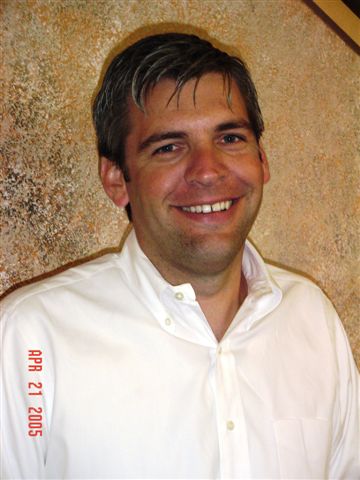
Since I first read “One Up on Wall Street” in the early 90’s, I’ve been an ardent fan of Peter Lynch’s “buy what you know” strategy for stock picking. Unfortunately, it’s taken a few years for the rest of the lessons in the book to have taken hold. So far, all of my “successful” stock picking has been done in virtual portfolios on the web. You see, the trick to investing is only half solved by finding the right companies to buy shares in. The really hard part, and perhaps the most difficult skill in business, is determining the right valuation for a business. Because of this, it’s very easy to fall in the trap of buying the right shares, but at the wrong price. (Picture is of Ray Ozzie, CTO of Microsoft, and former CEO of Groove Networks)
So I patted myself on the back the other day when I realized that as I get older, I am at least starting to ask the right questions. I spent about twenty minutes going over ratios and numbers for Microsoft, trying to decide if this is the right time to buy.
The reason I spent this time was that news from last week opened an excellent buying opportunity. As part of its earnings announcement, the company laid out plans for investing $2 billion dollars in R&D in 2007, a number far higher than expected by analysts. This means that Microsoft is reinvesting profits (spending their money) because they think they can make more by spending the money now. However, the immediate effect was that Wall Street saw that Microsoft’s projected earnings would be far lower for the coming year. Shares got whacked for 11% of their value, or $32 billion in market value. To give you an idea of just how big Microsoft is, that $32 billion would have been enough money to buy all of Costco (yes, the entire company). That’s a lot of money to lose in a matter of hours.
It’s very popular these days to follow Google, which is considered “the” growth stock of the tech sector these days. You’ll see story after story about Google challenging Microsoft’s dominance. I believe Google has a decent chance, but I’ve been in computing industry for a few years now, and one rule I continually come back to is – don’t bet against Microsoft.
As an investor (or “pho” one anyhow), I couldn’t go near Google with a ten foot pole right now. Trading at $408, Google just looks too expensive these days, not because of the $408 number, but because of it’s Price to Earnings ratio, which is at 71.95. That means, at 408 dollars, it would take you close to 72 years (at current earnings) to earn your money back. Of course, that in and of itself does not make Google a bad investment, it’s just one indicator. A lot could happen and will change.
No a better investment at this time (IMHO) is Microsoft, which because of this latest hit to the stock is trading at around $23, a P/E ratio of 18.7. Though a P/E ratio is best used as a comparable with companies in the same industry, a P/E of 18 is relatively low overall (at least for the tech sector – not some industries). For example, the five year high P/E for Microsoft is 57.41, which means MSFT is trading at one of its lowest prices in years.
So why buy Microsoft in the first place? There is a great little article in the May 15th Business Week called “Mixed Signals From Microsoft.” As one of the most widely held stocks in the world, investors are constantly watching the company for signs of what it will do next. Part of the current consternation (and the reason I patted myself on the back for asking the question) is what type of buying opportunity Microsoft currently represents. Investors like predictability, and as such, they like to classify stocks into “types.”
Microsoft is thirty-one years old, and in many people’s minds has passed the stage of “growth” stock and moved into more of a “value” type stock. This is why the market reacted poorly to the $2 billion dollar R&D investment. That indicates to the street that Microsoft still considers itself a growth stock. Microsoft is seen as a value investment that isn’t going to grow much more. Certainly it has some characteristics of a “cash cow” investment. Microsoft generates over one billion dollars in free cash flow…every month! The company is wildly profitable (incidentally, way more than Exxon Mobile).
So again, why buy Microsoft? Well, in my admittedly armchair opinion, Microsoft is still a growth stock. I wouldn’t bet against Microsoft yet and here is why. Number one, Bill Gates and Steve Ballmer are still in charge. Companies that are helmed by their original founders typically still are managed for growth. Number two, Microsoft is a “gamer,” they compete better than anyone, and they do so through big bets (see recent Fortune article about Ray Ozzie and Microsoft). Number three, well, in terms of revenue they can always grow. Microsoft had revenue of over $39 billion last year. A big number to be sure, but another computer company, IBM had sales of over $91 billion! Sure, IBM has a different mix of products, but Microsoft has proven its ability to move into additional markets in the past.
A disclaimer. It is likely too late for you to get fabulously rich from MSFT stock. It’s not going to climb another 61,000%, like it did from its 1986 IPO until now. However, as a solid, blue chip investment with good growth opportunity, I think Microsoft’s current price makes it buy.